
The right information, delivered at the right time, can help a pregnant woman make safer choices.
Being connected to healthcare matters during pregnancy, yet access is only part of the story. A woman may register for antenatal care, attend her checkups and have her blood pressure and weight monitored regularly. Between visits, though, she still has decisions to make. Is a new symptom something to worry about? Does she really need to take her medicine every day? When should she call a health worker or go to a hospital?
Mobile health (mHealth) programmes can help bridge this gap by bringing timely health information straight to a woman’s phone. An assessment of MaMitra, ARMMAN’s mHealth programme in Mumbai, points to a clear insight: for women, and especially those with high-risk pregnancies, information alone is not enough. Personalised guidance and support from health workers are essential to help them recognise risks and take timely action.
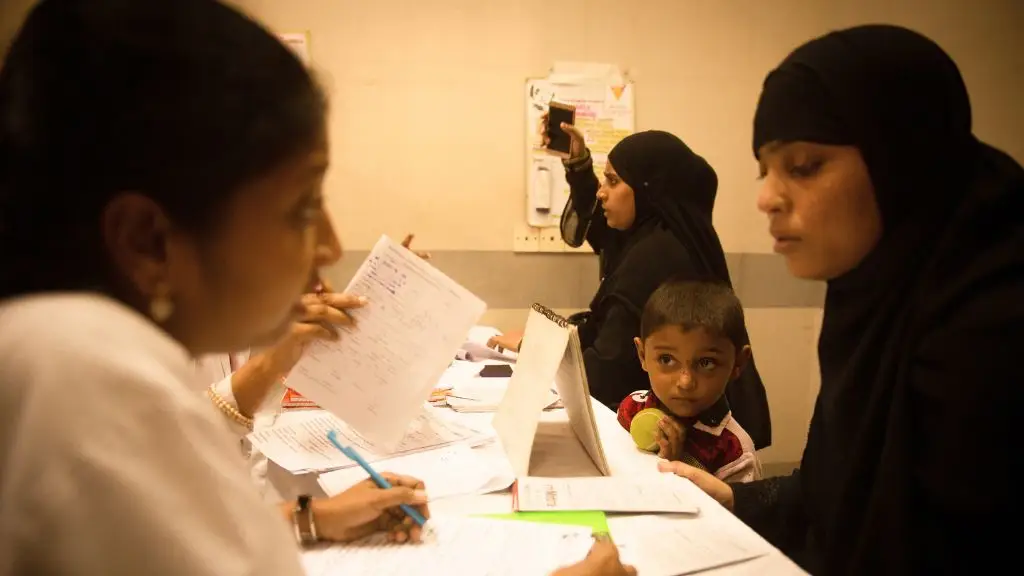
Targeted support for high risk pregnancies through MaMitra
MaMitra is ARMMAN’s maternal and newborn health programme in Mumbai, Maharashtra, implemented in partnership with the Brihanmumbai Municipal Corporation (BMC) across 38 of its health facilities, with a special focus on identifying and supporting women with high-risk pregnancies.
Every enrolled woman receives two Interactive Voice Response (IVR) calls a week, timed to her stage of pregnancy. The calls cover antenatal care (ANC), nutrition, danger signs and safe delivery, and after delivery they continue with guidance on caring for both the mother and her newborn.
Women with high-risk conditions such as anaemia, hypertension, gestational diabetes, thyroid disorders, previous C-sections, and bad obstetric history receive extra information about their condition and those with anaemia also receive targeted information through WhatsApp.
Hospital supervisors provide follow-up support and counselling to women with high-risk pregnancies, while regular reviews with BMC officials help ensure that programme decisions are informed by data.
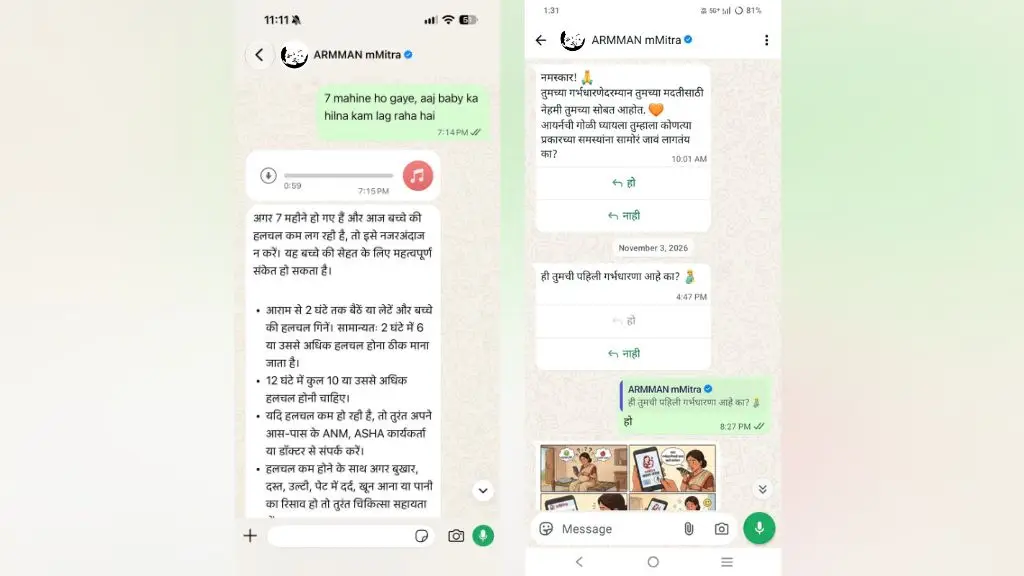
Women are also supported through a chatbot on WhatsApp, where they receive real time answers to questions about pregnancy, maternal health and childcare. Built in partnership with ARTPARK (AI and Robotics Technology Park) at the Indian Institute of Science, this artificial intelligence powered knowledge assistant provides reliable, stage specific guidance based on clinical protocols developed by ARMMAN.
Insights from the MaMitra Assessment
An assessment with the objective of assessing the uptake of antenatal care services and recommended practices by the beneficiaries of the program including high-risk pregnant women, was carried out during
April to June 2026. A telephonic survey was carried out with recently delivered women who were part of the program for atleast 5 months.
A total of 381 women consented to participate in the survey. Among these, 42 women had experienced adverse pregnancy outcomes, including stillbirths, miscarriages, or abortions, and were excluded from the subsequent analysis. Of the remaining 339 women who reported live births, 6 had experienced neonatal deaths. Consequently, the survey was completed with 333 women whose babies were alive at the time of the survey.
Survey at length was conducted with 333 women with live births. Almost all women had registered for the antenatal care in government health facilities where their weight and blood pressure were checked routinely. Nearly three in five completed eight or more ANC visits, the minimum recommended by the World Health Organization (WHO).
We compared high listeners, who heard more than half of the voice calls, with low listeners, who heard fewer than a quarter of them. The survey included equal number of low listeners (N=167) and high listeners (N=166) to examine the effect of our content on service uptake and health outcomes. Women who heard the content in between were not part of the survey.
Women who heard more MaMitra calls were more likely to complete at least eight antenatal checkups and to plan for pregnancy expenses than those who heard fewer.
What women reported
| High listeners | Low listeners | |
| Eight or more ANC checkups | 61.4% | 57.5% |
| Financial planning for pregnancy expenses | 79.0% | 73.1% |
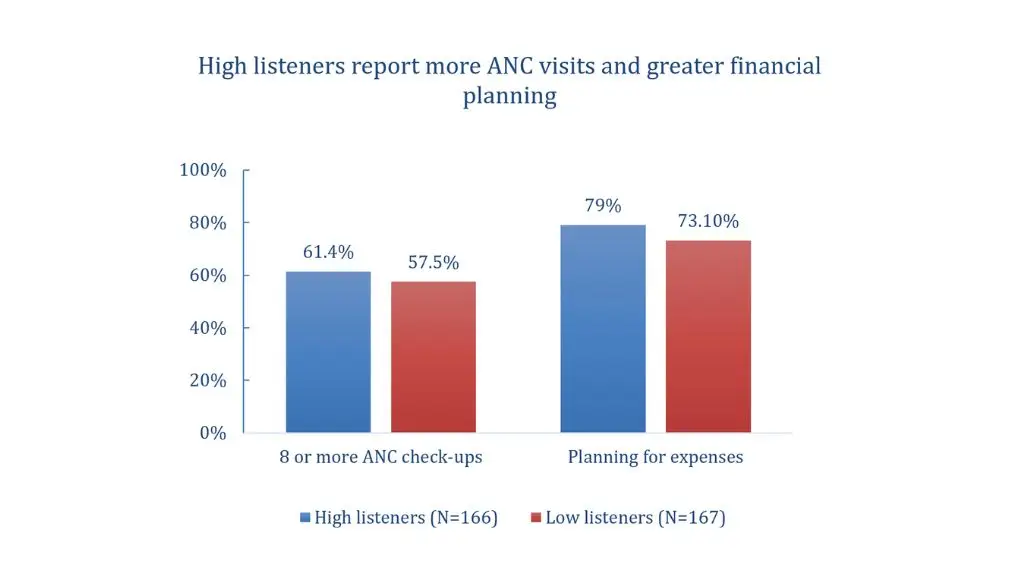
These differences are modest and suggest that steady communication throughout pregnancy may help women stay engaged with their maternal care.
Medication adherence and birth outcomes
High-risk pregnancies represent only 20 to 30% of all pregnancies, yet they account for 70 to 80% of deaths and complications around the time of birth
(Modugu et al., 2025).
Regular support may be especially valuable for these women, and many of them reported closely following their treatment.
Women with anaemia, hypertension, diabetes and hypothyroidism reported high adherence to medications and diet. About eight in ten women with hypothyroidism said they took their medicines regularly, and nearly nine in ten women with diabetes said they followed the prescribed diet.
Pregnancy outcomes offer another encouraging sign. Among the pregnancies reviewed, 339 ended in live births, and 94.1% of newborns were reported to be healthy and doing well. Among women with high-risk pregnancies, live births were reported for 87% of high listeners, compared with 78% of low listeners.
The calls alone cannot account for this gap. Women who listen to more calls may differ from low listeners in other ways. Even so, the pattern deserves continued attention as the programme develops.
Gaps in awareness and delays in seeking help
Most women enrolled in MaMitra are connected to antenatal services, yet many with high-risk conditions could not recall the danger signs that should prompt them to seek care. Danger signs are symptoms in pregnancy that need urgent medical attention, such as bleeding, severe headache or blurred vision, swelling of the face or hands, or reduced movement of the baby.
Depending on the condition, between 50% and 71% of women with high-risk pregnancies could not recall danger signs. Nearly one in four women with anaemia reported delay in care when their symptoms worsened. Many women managing diabetes, hypertension or hypothyroidism were also not following the recommended monitoring and exercise routines.
This highlights an important distinction. Receiving information is one step. Remembering it, understanding why it matters, recognising when it applies and knowing what action to take are separate challenges.
For MaMitra, the opportunity lies in making communication more relevant and easier to act on, rather than simply adding more of it. Women with uncomplicated pregnancies may benefit from regular information suited to their stage of pregnancy. Women managing high-risk conditions need tailored messages, repeated reminders of danger signs, personalised counselling and clear pathways for seeking help.
A tech-enabled, people-centred approach to high-risk pregnancy care
MaMitra’s assessment shows that mHealth can connect women with high-risk pregnancies to care, and that this connection is only the first step.
Women reached through the programme are engaged with essential maternal health services, and many with high-risk conditions are already following their treatment. What they need next is help turning information into action at the right moment.
That means calls that reinforce one clear action at a time, counselling shaped around each woman’s condition, and messages that draw a clearer line from danger signs to timely care and referral. Technology extends the reach of this support, while CHWs, ASHAs, counsellors and BMC teams remain central to follow up and care. This combination of technology and human support enables more personalised care, helping women make informed decisions and supporting healthier outcomes for mothers and babies.
Evaluations like these show us what is working and how a programme can become more useful. Sometimes the real difference lies in whether a woman receives the information she needs, understands what it means and knows what to do next.
Learn more about MaMitra and support our work to empower mothers to make healthier choices for themselves and their children.
You may also like to read about our work on high-risk pregnancy tracking and management through which we train with health workers across India, to provide continuum of care for pregnant women.
Frequently asked questions
What is mHealth?
Mobile health or mHealth, is the use of mobile phones and other wireless devices to deliver health information and services. With reference to maternal and child health, it often takes the form of voice calls, text messages or communication through applications like WhatsApp, that guide women through pregnancy and early motherhood.
MaMitra uses Interactive Voice Response (IVR) calls, WhatsApp messaging and an AI chatbot to support women in Mumbai.
What are the benefits of mHealth for pregnant women?
mHealth is beneficial for pregnant women as it can result in easier access to services such as antenatal care, and connects them to health workers.
In Mumbai, our assessment found encouraging patterns. Among women with high-risk pregnancies, live births were reported for 87% of women who heard more than half the calls, compared with 78% of those who heard fewer than a quarter of them.
Is health information alone enough during pregnancy?
Health information during pregnancy does not ensure that women understand why it matters, recognise when it applies and know what to do. In our assessment, between 50- 71% of women with high-risk conditions could not recall danger signs, despite listening regularly to the IVR calls. The information empowers women to proactively seek help, but health workers play a crucial role in ensuring they receive quality care.